Leave Your Message

What Are the Top Types of Aluminum Die Casting Parts?

Aluminum Die Casting Parts sit at the intersection of lightweight design, high-volume production, and demanding performance targets. Their value is visible in a thin automotive housing, a ribbed gearbox cover, or a small connector with carefully controlled wall thickness. Fortune Business Insights reported that the global die casting market reached approximately USD 83.64 billion in 2023. Its forecast points toward continued growth through 2032, supported by automotive electrification, industrial automation, and transportation efficiency.

However, market growth does not make every aluminum part a good die-casting candidate. Alloy selection, draft angles, porosity control, dimensional tolerances, and tooling costs still decide practical success. The American Foundry Society and the North American Die Casting Association both emphasize process-aware design. William G. Walkington, a longtime NADCA technical contributor, stated, “Good die-casting design begins with a clear understanding of the process.” That principle remains easy to overlook.

This guide examines the top types of Aluminum Die Casting Parts and explains where each type performs best. It considers housings, brackets, covers, heat sinks, motor components, and structural assemblies. Real production experience shows that the smallest design detail can create the largest manufacturing problem. A sharp internal corner may trap stress. An uneven wall may invite shrinkage or distortion. Industry reports also use different market definitions, so their figures should not be treated as absolute. That uncertainty deserves attention. The better question is not simply which part is popular, but which part combines function, alloy behavior, tooling efficiency, and reliable service performance.
What Are the Top Types of Aluminum Die Casting Parts?

What Defines an Aluminum Die Casting Part?

What Are the Top Types of Aluminum Die Casting Parts?

An aluminum die casting part is a shaped component formed by forcing molten aluminum alloy into a reusable steel die. Pressure fills narrow ribs, mounting bosses, and thin walls before rapid solidification. That process defines the part more clearly than its appearance. A machined aluminum block is not automatically a die casting part.

The material choice also matters. Aluminum alloys offer low density, corrosion resistance, and useful thermal conductivity. The Aluminum Association reports that a 10% vehicle weight reduction can improve fuel economy by roughly 6–8%. This helps explain the popularity of cast housings, motor covers, transmission cases, brackets, and heat-management components. According to the 2024 U.S. Geological Survey Mineral Commodity Summaries, global primary aluminum production reached about 70 million metric tons in 2023. Supply is broad, but alloy quality still depends on controlled melting and traceability.

10%
vehicle weight reduction
6–8%
potential fuel economy improvement

Geometry is another defining feature. A reliable die casting usually includes draft angles, balanced wall thickness, proper fillets, and planned ejection points. These details reduce porosity, distortion, and sticking. They also make trimming and inspection more predictable. Small errors can become expensive. In practice, designers sometimes overtrust computer simulations and underestimate venting or tool wear. That is a useful warning. A part may meet its drawing dimensions yet fail fatigue testing because hidden pores weaken a stressed section. Therefore, serious qualification should combine dimensional checks, pressure testing, metallographic review, and service-based testing. Perfect results are uncommon. Better evidence is the real objective.
How Aluminum Die Casting Parts Are Classified

Aluminum die casting parts are best classified by process, geometry, and function. High-pressure die casting suits thin-wall housings, covers, brackets, and complex automotive frames. Low-pressure casting creates denser parts, often wheels and larger structural sections. Gravity casting works well for simpler shapes and smaller production runs. The process changes the part’s density, surface finish, and likely defect pattern.

Geometry adds another useful layer. Thin-wall parts may include sensor housings with ribs, bosses, and mounting holes. Thermal parts often use fins to move heat away from electronics. Structural parts need thicker load paths and controlled porosity. A 2024 Grand View Research report estimated the global aluminum die casting market at about USD 79.5 billion in 2023. That scale reflects demand for lighter, repeatable components, not identical part designs.

Function provides the clearest shop-floor classification. Powertrain parts manage heat and vibration. Chassis parts carry loads. Electrical enclosures protect sensitive components. The U.S. Geological Survey reported roughly 70 million metric tons of primary aluminum production worldwide in 2023, showing the material’s broad industrial supply. Still, aluminum volume does not guarantee casting quality. In production reviews, engineers should inspect wall transitions, gate locations, and machining allowances. Classification can become subjective. A heat sink may also be an enclosure, and a structural housing may serve electrical protection. That overlap deserves careful documentation.

Top Types of Aluminum Die Casting Parts

Aluminum die casting parts are commonly classified by their function and geometry. The chart compares representative wall-thickness ranges used for major part categories. Actual values vary with alloy, casting process, tooling, part size, and structural requirements.

Thin-wall heat sinks and covers prioritize lightweight thermal or protective performance, while brackets, valve bodies, and structural parts generally require thicker sections for strength, sealing, or load transfer.

What Are the Main Types of Aluminum Die Casting Parts?

What Are the Main Types of Aluminum Die Casting Parts?

Aluminum die casting parts usually fall into several practical groups based on their shape and function.

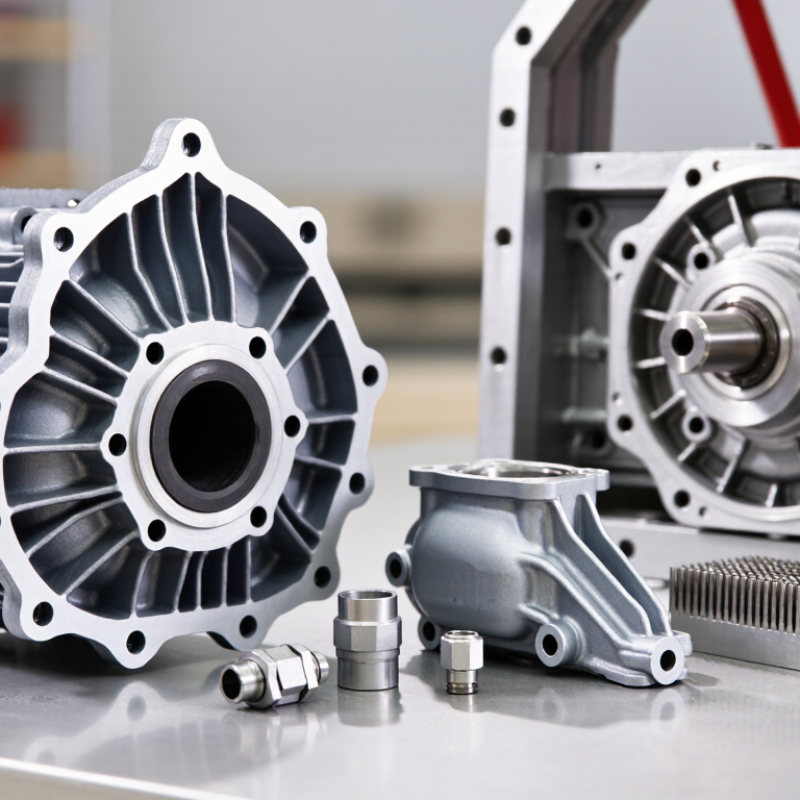
Housings and covers protect motors, sensors, control units, and small gear systems. They often include ribs, mounting bosses, and narrow sealing edges.

Brackets and structural supports provide stiffness without adding much weight. Their design must balance strength, draft angles, and easy ejection from the die.

Heat sinks Heat sinks are another important type. They use fins or extended surfaces to move heat away from electronic components. Thin fins can improve cooling, but they may fill unevenly during casting.

Automotive parts include transmission cases, pump bodies, steering components, and motor supports. These parts need stable dimensions because small alignment errors can create noise, vibration, or premature wear.

Industrial castings may include valve bodies, machine frames, and pneumatic components.

Part design directly affects reliability.

Engineers normally review wall thickness, metal flow, shrinkage, porosity, and machining allowance before production. X-ray inspection or pressure testing may be necessary for sealed parts.

A smooth surface is not always proof of internal quality. That assumption can be costly.

Sharp corners also deserve attention because they increase stress and restrict metal flow. In practice, a slightly thicker, better-radiused feature may perform better than a thinner design chasing minimum weight.

Casting trials sometimes reveal problems that simulations miss. The process is precise, but not perfect.

Which Industries Use Different Aluminum Die Casting Parts?

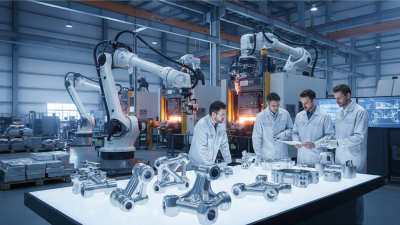
Automotive manufacturers use aluminum die casting parts for transmission housings, motor covers, brackets, and structural support pieces. These components need low weight, steady dimensions, and reliable heat dissipation. A thin-walled motor housing can reduce vehicle mass while protecting sensitive electrical parts from road moisture. In real production, small air pockets may still appear. Engineers therefore inspect critical castings with imaging, pressure testing, and dimensional checks.

The electronics industry often selects aluminum enclosures, heat sinks, connector bodies, and mounting frames. These parts spread heat from power modules and shield internal circuits from impact. Their surfaces may also receive machining or protective finishing when appearance matters. HVAC manufacturers use compressor housings, valve bodies, fan supports, and control-box covers. Each part must tolerate vibration, temperature changes, and long operating cycles. A beautiful casting is not enough.

Power tools and industrial automation equipment require compact gear cases, trigger housings, sensor mounts, and robotic joint covers. Aluminum helps these products remain portable without sacrificing stiffness. Lighting manufacturers use reflector bodies and heat-dissipating frames, especially around high-temperature components. Medical equipment makers may use aluminum housings for monitors, carts, and diagnostic devices, where clean surfaces and accurate assembly are important. The best design is not always the most complex one. Sometimes, a thicker wall improves durability, but it can increase weight and cooling time. Experienced teams compare load, heat, corrosion risk, and production volume before choosing a die casting structure.

How Do You Choose the Right Aluminum Die Casting Part?

Choosing the right aluminum die casting part starts with its working conditions, not its appearance. A housing, bracket, heat sink, or motor cover may require very different designs. Define the load, temperature, vibration, and expected service life before selecting a shape. A part exposed to road spray needs different protection from an indoor electrical enclosure.

I have found that wall thickness often decides success. Thin sections can reduce weight, but they may fill unevenly during casting. Very thick areas can create shrinkage defects and longer cooling times. Keep walls as consistent as practical. Add smooth ribs for strength, and avoid sharp internal corners. Small changes to draft angles can also improve ejection and reduce surface damage.

Material selection deserves careful attention. Common aluminum alloys offer different balances of strength, fluidity, corrosion resistance, and machinability. Ask whether the part needs pressure tightness, threaded holes, or post-casting machining. Tolerances should match the function. Overly tight dimensions increase cost without improving performance. That mistake is easy to make.

Request sample data, inspection records, and process details from the casting supplier. A capable team should explain filling behavior, porosity risks, tooling limits, and finishing options. Prototype testing can reveal problems that drawings miss. Check fit, heat transfer, vibration response, and machined surfaces. The first design is rarely perfect. Leave room to revise it.