Top Metal Die Casting Techniques for Global Buyers?
Metal Die Casting is a fundamental manufacturing process. It creates complex parts with high precision and durability. Global buyers often seek the best techniques to enhance production efficiency.
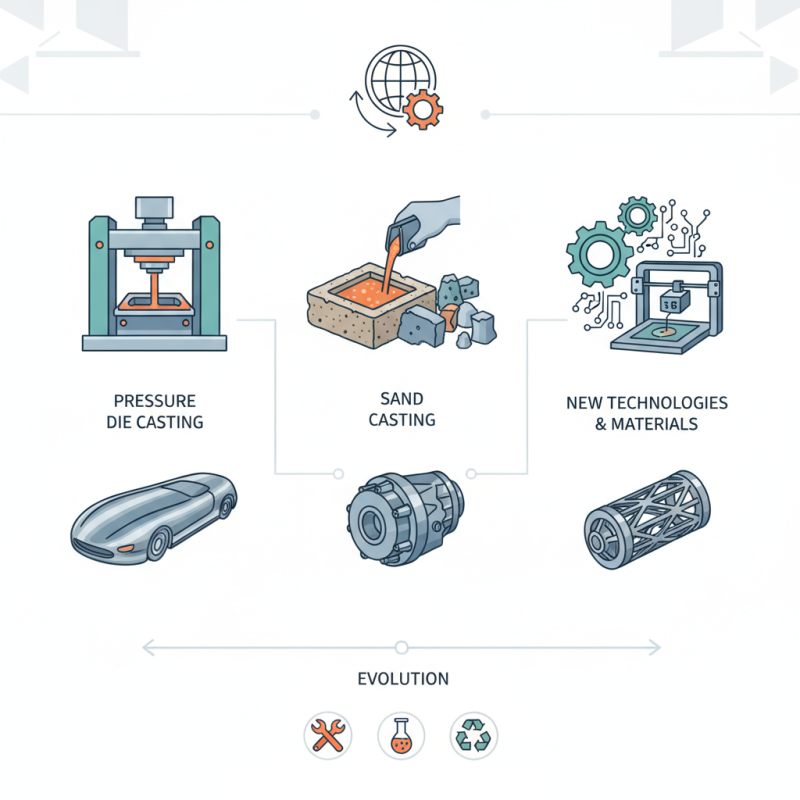
Several die casting methods exist today. Each technique has unique advantages and challenges. For instance, pressure die casting offers excellent surface finish, while sand casting provides versatility in design. Understanding these methods is crucial for selecting the right approach.
Moreover, the landscape of metal die casting is constantly evolving. New materials and technologies emerge regularly. This evolution prompts buyers to reconsider their choices. By staying informed, they can make better decisions to improve product quality and reduce waste.
Overview of Metal Die Casting Techniques
Metal die casting is a vital manufacturing process widely used in various industries. Techniques such as high-pressure die casting, low-pressure die casting, and gravity die casting each offer unique benefits. According to recent industry reports, the global die casting market is expected to grow at a CAGR of 5.6% from 2022 to 2030, driven primarily by demand from the automotive sector.
High-pressure die casting is prominent for producing complex shapes with high dimensional accuracy. It can achieve production rates of up to 60 parts per minute. However, challenges can arise with porosity and defects in castings, which require advanced quality control measures. Conversely, low-pressure die casting provides better control over molten metal flow but is slower. This method can be more prone to system failures, leading to increased maintenance costs.
Gravity die casting is less common but offers flexibility, especially for low-volume projects. It often results in better surface finish and mechanical properties. Yet, this technique might not be suitable for all types of alloys. The choice of technique heavily relies on specific project requirements and economic considerations. Exploring these casting methods helps buyers make informed decisions aligned with their production goals.
Top Metal Die Casting Techniques Overview
Comparison of Pressure Die Casting vs. Gravity Die Casting
Die casting is a crucial process in metal manufacturing. The main techniques include pressure die casting and gravity die casting. Understanding the differences can aid global buyers in decision-making.
Pressure die casting allows for high-speed production. This method uses a forceful injection of molten metal into a mold. It produces parts with excellent dimensional accuracy. Data indicates that 80% of die-cast products come from pressure methods. This technique is ideal for large-scale production. However, the initial setup costs can be substantial.
On the other hand,
gravity die casting depends on gravity to fill the mold. While it may not achieve the same precision as pressure casting, it offers advantages for specific applications. It generally requires lower tooling costs. Reports show that gravity die casting is often chosen for smaller runs and complex shapes. The quality can vary, sometimes requiring additional finishing processes. A buyer should consider both methods’ pros and cons based on project needs.
Innovative Materials Used in Metal Die Casting
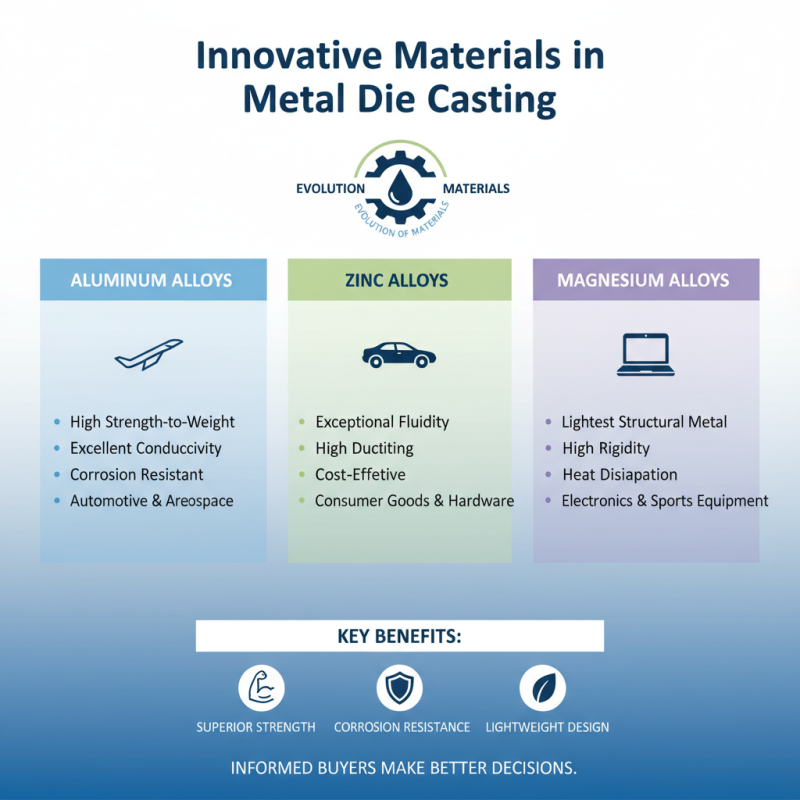
Metal die casting has evolved significantly with innovative materials. Buyers must understand these advancements to make informed decisions. Aluminum, zinc, and magnesium alloys are often used in modern casting processes. Each material has unique benefits, such as excellent strength-to-weight ratios and corrosion resistance.
Tips: Consider the application of your component before selecting the material. Different alloys offer varying thermal and electrical conductivity. If your product requires durability, aluminum might be the best choice. Reflection on the intended use is crucial.
Another innovative material is copper-based alloys. These materials provide superior machinability and thermal properties. However, they can be more expensive than traditional options. Buyers should weigh the cost against the performance requirements.
Tips: Always inquire about the casting technique used with your chosen material. Some methods may achieve better results based on the alloy properties. Remember, a less common alloy might lead to unanticipated design challenges. Always remain open to testing and adjustments.
Factors Influencing the Choice of Die Casting Technique
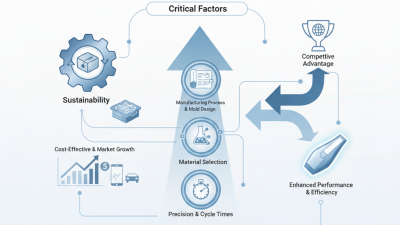
When choosing a die casting technique, several factors come into play.
Cost is often a primary consideration. High-quality techniques may require more investment initially. Yet, they can yield better, more durable products over time.
This dilemma often forces buyers to weigh short-term costs against long-term benefits.
Material compatibility is another important factor. Different metals respond uniquely to various processes.
Some techniques work best with aluminum, while others suit zinc or magnesium.
A mismatch can lead to product failure. Thus, understanding materials and their characteristics is essential.
Production volume also impacts the choice. High-volume production often necessitates more sophisticated methods.
These can enhance efficiency and reduce cycle times. However, this can also increase complexity.
Smaller projects may benefit from simpler techniques, even if they are less efficient.
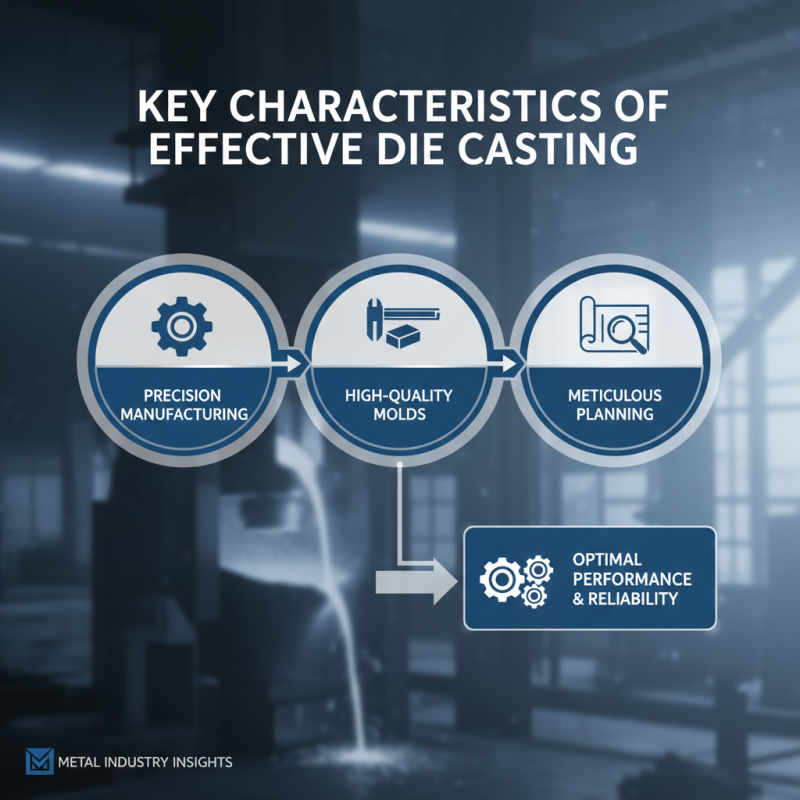
Balancing these elements can be challenging but is crucial for successful die casting outcomes.

 +86-13516964051


 CONTACT NUMBER
 CONTACT NUMBER