Why Are Engineering Castings Essential for Modern Manufacturing?
In the realm of modern manufacturing, Engineering Castings play a vital role. Renowned expert Dr. Emily Carter states, "Engineering Castings are the backbone of innovation." Her insight highlights the importance of precision and reliability in today's production processes.
Engineering Castings provide a gateway for creating complex shapes. They enable manufacturers to produce parts that would be difficult or impossible to achieve through traditional methods. This versatility fosters creativity in design and production.
However, challenges persist. Quality control remains a critical factor. Defects can lead to costly delays and reworks. The demand for higher standards pushes the industry to continuously improve. Engineering castings must evolve to meet the changing needs of modern manufacturing. This ongoing journey urges reflection on current practices and innovations.
The Role of Engineering Castings in Modern Manufacturing Processes
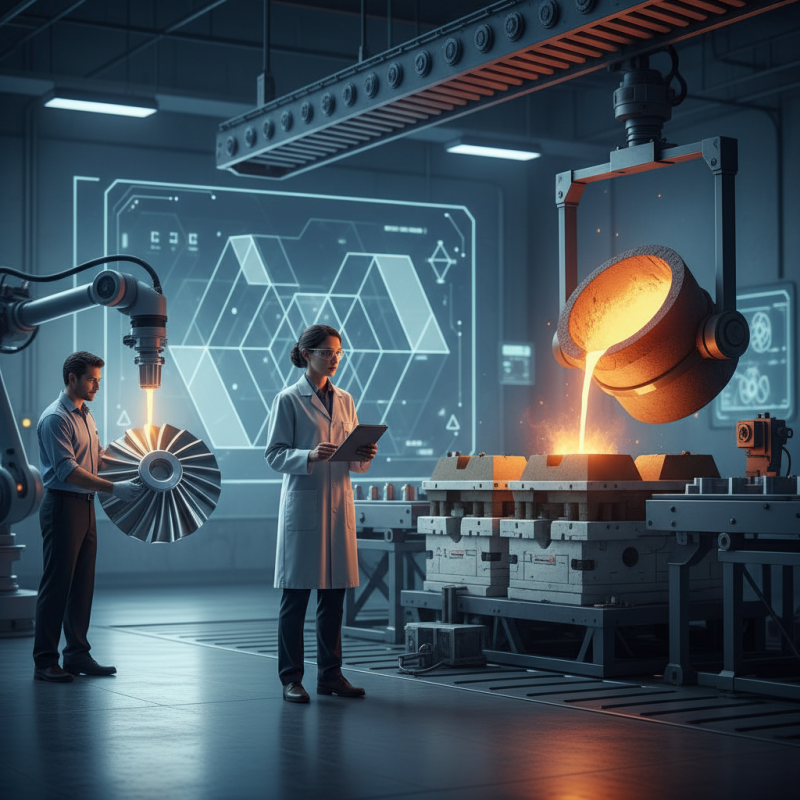
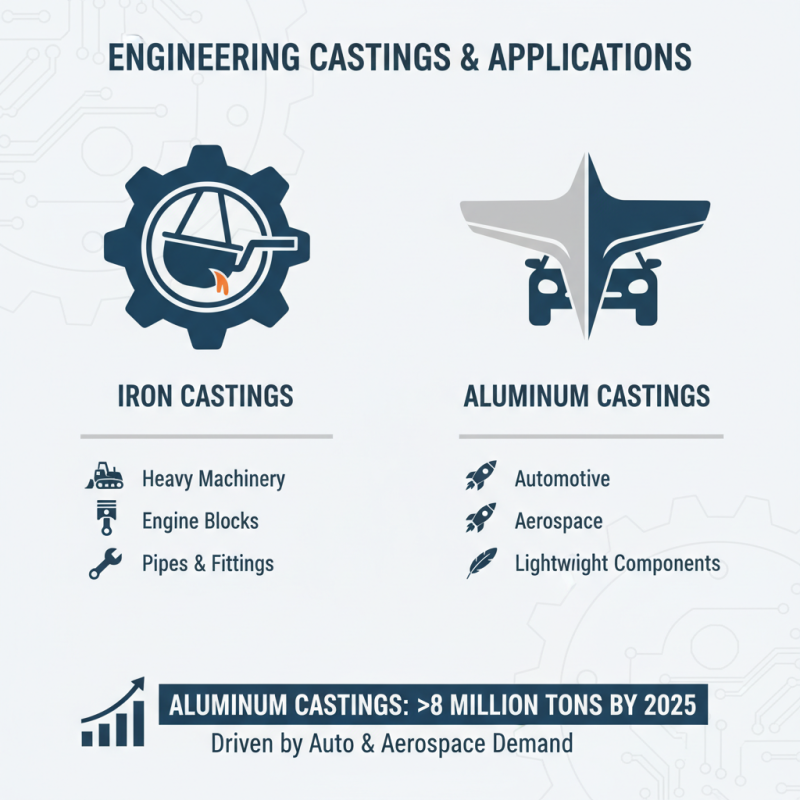
Engineering castings play a vital role in modern manufacturing processes. They provide the foundation for various industries, including automotive, aerospace, and heavy machinery. According to a recent market report, the global casting market is projected to reach over $160 billion by 2026. This reflects a growing demand for precision components across multiple sectors.
In manufacturing, castings are crucial for creating complex shapes and designs. They allow engineers to produce intricate components more efficiently than traditional methods. A study by the American Foundry Society highlights that nearly 60% of all engineering materials are made using castings. However, challenges remain. The accuracy required in casting can be difficult to achieve consistently, leading to wastage and increased costs.
Additionally, advancements in technology are not always directly applicable to casting processes. Automation and AI can streamline production, yet they do not eliminate the need for skilled labor. The gap in skill levels among workers can hinder progress. Balancing innovation with practical capabilities is a continual struggle in the industry.
Advantages of Using Castings in Production Efficiency and Cost-Effectiveness
Engineering castings play a pivotal role in modern manufacturing. Their contribution to production efficiency is remarkable. According to a report by the Casting Industry, approximately 90% of manufactured metal products incorporate some form of casting. This reveals their widespread utilization across various sectors.
Using castings helps reduce costs significantly. They allow for complex shapes to be formed with precision, thus minimizing machining requirements. A study conducted by the Foundry Educational Foundation indicates that using castings can lower production costs by nearly 30%. This is crucial for companies aiming to stay competitive.
Despite the benefits, there are challenges. Not all castings meet the stringent quality standards needed for high-performance applications. Some casting processes can produce defects, leading to waste and additional costs. Manufacturers must continually address these issues to ensure that castings enhance productivity effectively. The journey toward optimal casting involves ongoing testing and improvement.
Why Are Engineering Castings Essential for Modern Manufacturing? - Advantages of Using Castings in Production Efficiency and Cost-Effectiveness
| Dimension |
Value |
Benefit |
| Weight of Castings |
5 kg |
High durability and strength |
| Production Time |
2 weeks |
Reduces lead time for complex designs |
| Surface Finish Quality |
Ra 1.6 μm |
Improves part functionality and aesthetics |
| Cost Per Unit |
$50 |
Cost-effective for large production volumes |
| Material Variety |
Aluminum, Iron, Steel |
Meets different application needs |
| Casting Tolerance |
±0.5 mm |
Ensures precision in manufacturing |
Recent Innovations in Casting Technology for Enhanced Performance
Recent advancements in casting technology have transformed modern manufacturing.
These innovations focus on enhancing performance and precision.
For example, simulations now aid in predicting casting outcomes. This helps reduce defects and improves the quality of final products.
The introduction of 3D printing in molds allows for complex designs that were not feasible before.
Manufacturers can produce intricate shapes and reduce waste in materials.
Additionally, the use of new alloys offers better strength and durability.
These materials can withstand extreme conditions, thus expanding their applications.
Some engineers face challenges in adapting to these newer technologies.
There is often a learning curve that can slow down initial processes.
However, the potential benefits are significant.
Sustainable practices, like using recycled materials, have also emerged, but their implementation is still uneven across the industry.
In summary, while challenges exist, the benefits of innovative casting technologies to manufacturing are clear.
There is an ongoing need for companies to invest in training and infrastructure.
As the industry evolves, the capacity to adapt will determine future success.
The journey is not flawless, but it offers exciting possibilities.
Challenges and Solutions in the Casting Production Industry
The casting production industry faces significant challenges today. Quality control remains a persistent issue. Defects can occur at any stage of the process. From mold making to metal pouring, each step requires precision. Operators often struggle with inconsistencies. Equipment maintenance is another concern. Downtime can lead to production delays and increased costs.
Finding skilled workers is increasingly difficult. Many experienced craftsmen are retiring. New entrants may lack the necessary training. This creates a skills gap that many companies are struggling to close. Additionally, the environmental impact of casting processes continues to raise questions. Companies must adopt greener practices while maintaining output levels.
Innovation is vital for overcoming these challenges. Advanced technologies, like 3D printing, are beginning to reshape traditional methods. Materials science also plays a crucial role, developing stronger alloys that reduce waste. However, the transition can be slow and costly. Businesses must weigh the benefits against the investment needed. Embracing change is essential, but not without its hurdles. The path forward requires both creativity and careful planning.
Engineering Castings Production Challenges and Solutions

 +86-13516964051


 CONTACT NUMBER
 CONTACT NUMBER