Leave Your Message

How to Choose the Best Metal Casting Machine for Your Needs?

Choosing the right Metal Casting Machine can significantly impact your production efficiency and quality. According to a report by the International Journal of Advanced Manufacturing Technology, nearly 45% of manufacturers find that their casting processes are hindered by outdated machinery. Ensuring you have the best equipment tailored to your needs is crucial for competitiveness.

Expert Mark Davidson, a leading authority in metal manufacturing technology, states, “Investing in the right Metal Casting Machine can transform production capabilities and enhance precision.” His insights underline the importance of machine selection in driving operational success.

Many manufacturers overlook specific needs during their selection process. Features like automation level, production capacity, and compatibility with different metals should not be ignored. Failing to address these factors could lead to inefficiencies and increased costs. Thoughtful consideration can lead to more impactful decisions.
How to Choose the Best Metal Casting Machine for Your Needs?

Understanding Different Types of Metal Casting Machines Available

How to Choose the Best Metal Casting Machine for Your Needs?

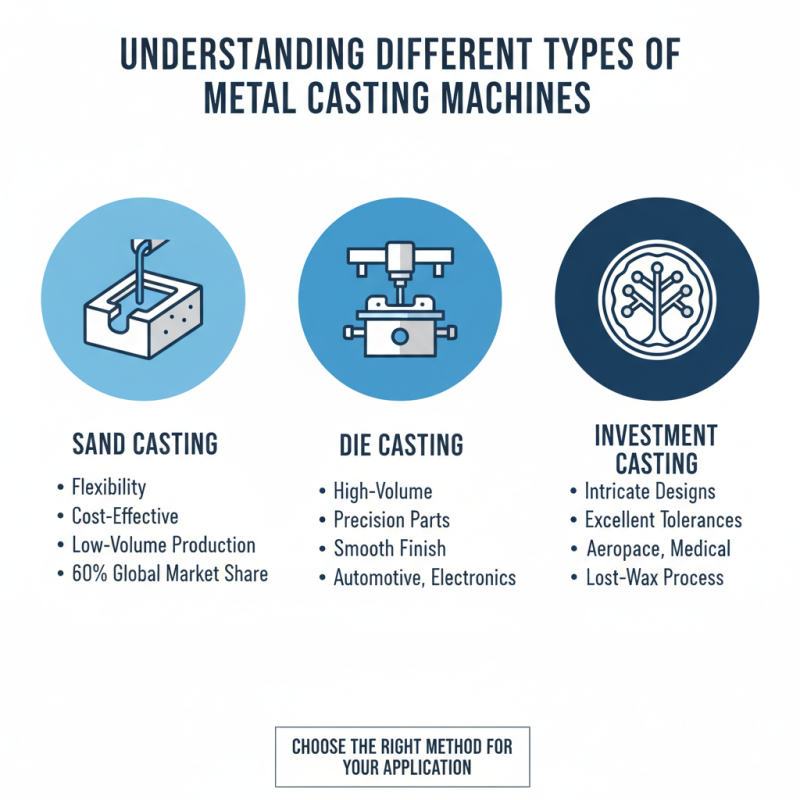
When selecting a metal casting machine, understanding the various types is crucial. Metal casting encompasses several techniques, each suited for different applications. The most common methods include sand casting, die casting, and investment casting. Each offers unique advantages. For instance, sand casting is favored for its flexibility and cost-effectiveness, especially for low-volume production. It accounts for nearly 60% of the global metal casting market, as per recent studies.

Die casting, on the other hand, is excellent for high-volume production runs. It yields precise, complex shapes with a smooth finish. The North American Die Casting Association reported a growth rate of 4% over the past year, highlighting its increasing demand. However, die casting requires significant initial investment, which might not be feasible for smaller operations. Investment casting, known for its high dimensional accuracy, serves specialized industries, particularly aerospace and medical. Its adoption is growing, with the sector projected to reach $6.5 billion by 2026.

While each method has its merits, assessing your production needs is essential. Consider factors like production volume, part complexity, and material type. Some techniques may not align well with your specific requirements, revealing a potential mismatch. Balancing cost, quality, and efficiency is key to making an informed decision in today’s competitive landscape.
Key Factors to Consider When Choosing a Metal Casting Machine

When selecting a metal casting machine, evaluating your specific requirements is essential. You need to consider the type of metal you will use. For example, aluminum and steel require different casting techniques. According to industry reports, aluminum casting had a market size of over $3 billion in 2022. This indicates its growing use in various sectors, highlighting the importance of selecting the right equipment.

Another important factor is machine capacity. The weight and dimensions of the parts you want to produce play a significant role. Machines designed for smaller components may not suffice for larger items, leading to inefficiencies. Research shows that improperly sized machines can result in production delays and increased costs, which may undermine your operational goals.

Additionally, automation capabilities are becoming increasingly favored in modern casting. Automated machines can enhance precision and reduce labor costs. However, higher automation may lead to a longer learning curve and initial setup time. Dassault Systèmes reported that up to 40% of production time can be lost during the initial phase of automation implementation. Therefore, weighing the trade-offs between efficiency and complexity is vital for making a well-informed decision.

How to Choose the Best Metal Casting Machine for Your Needs?

Assessing Your Production Needs and Expected Output

When selecting a metal casting machine, start by assessing your production needs. Understand the types of metals you will be working with and their specific casting properties. According to industry research, around 30% of production failures are linked to mismatched equipment capabilities. This statistic highlights the importance of a proper fit between your machine and material.

Evaluate your expected output. Factors include production volume and speed. A report by the Metal Casting Industry Association indicates that efficient machines can boost output by up to 25%. Always consider your future growth too. A machine that handles current needs might limit your ability to expand.

Do not overlook maintenance needs. Regular upkeep can be a hidden cost, affecting your bottom line. Studies show that about 15% of companies do not account for maintenance schedules when estimating production costs. This oversight can lead to unexpected downtime. Seek machines that ease maintenance processes, ensuring you have a reliable production flow.

Evaluating Machine Features and Specifications for Efficiency

How to Choose the Best Metal Casting Machine for Your Needs?

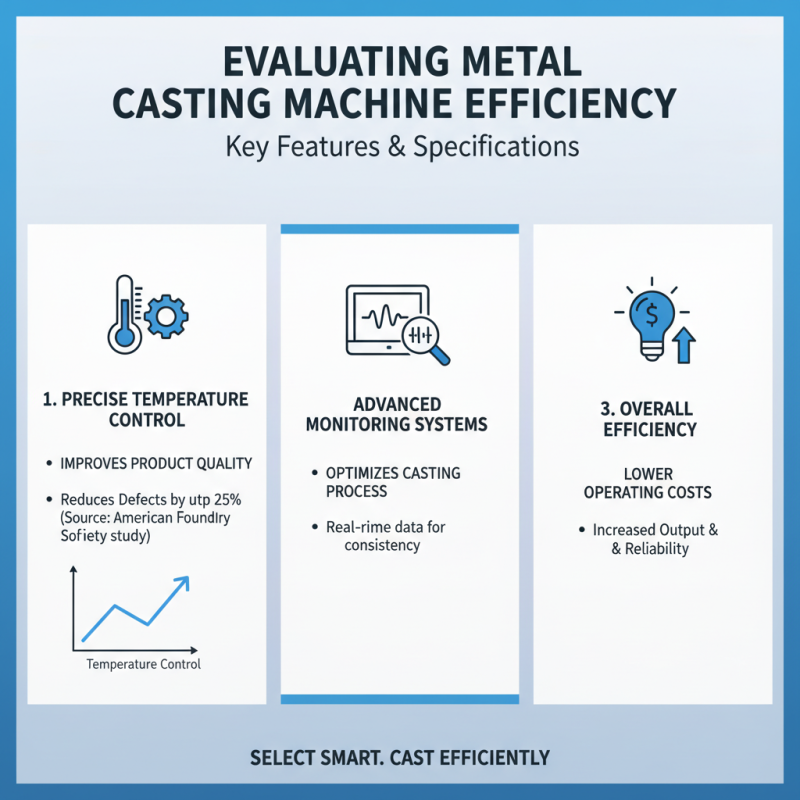
When selecting a metal casting machine, evaluating its features and specifications is crucial for ensuring efficiency. A study by the American Foundry Society indicates that machines with precise temperature control can improve product quality by up to 25%. Look for machines equipped with advanced temperature monitoring systems. These can reduce defects and optimize the casting process.

Another important aspect is the machine's production speed. According to recent data, casting machines that operate at higher speeds can increase output by 30%. However, be cautious—higher speed sometimes compromises quality. Consider a balanced approach, focusing on a machine that offers both speed and reliability.

Additionally, energy consumption should not be overlooked. Machines that consume less energy can reduce operational costs significantly. Reports show that energy-efficient models can cut costs by around 15% annually. Yet, it’s essential to assess whether the upfront investment aligns with long-term savings. Evaluating these specifications will help you select a machine that meets both your production needs and budget constraints.

Budgeting and Cost Considerations for Metal Casting Equipment

When selecting a metal casting machine, budgeting is crucial. This equipment represents a significant investment for many businesses. According to recent industry reports, the average cost of a high-quality metal casting machine ranges from $50,000 to $150,000, depending on its specifications and capabilities. Companies must assess their financial capacity before making a decision.

Cost considerations are not limited to the initial purchase. Ongoing maintenance can also add up. Some machines require specific parts and experienced technicians for repairs, which can increase operational costs significantly. For instance, a study indicated that maintenance costs could account for 10-20% of the total investment over the machine's lifespan. It's essential to account for these factors when planning a budget.

Additionally, potential buyers should reflect on the long-term value of the machine. Equipment that appears cheaper may compromise productivity or durability. Research shows that investing in a more reliable machine pays off through lower operational disruptions and better quality outputs. Balancing the immediate budget against future savings requires careful consideration, prioritizing reliability over upfront cost.

How to Choose the Best Metal Casting Machine for Your Needs?

Dimension Details Cost ($) Notes
Small Desktop Machine Ideal for hobbyists and small projects 500 - 2000 Limited capacity, suitable for small runs
Medium Production Machine Good for small to medium scale operations 2000 - 10000 Higher efficiency, can handle more material
Large Industrial Machine Best for high-volume production 10000 - 50000 Requires significant investment, space, and maintenance
Investment Casting Machine Used for creating precise molds 25000 - 100000 Specialized use, ideal for intricate designs
Die Casting Machine Great for mass production with high precision 15000 - 80000 Fast production speeds, but high initial cost