What Is the Best Aluminum Casting Machine in 2026?
Choosing the best Aluminum Casting Machine in 2026 requires more than comparing prices or advertised tonnage. The right choice depends on alloy, part geometry, production volume, energy use, and operator skill. A machine that excels in a busy factory may struggle in a small workshop. There is no universal winner.
This guide examines die-casting, gravity-casting, and low-pressure systems through practical performance criteria. It considers melt control, clamping stability, cycle consistency, cooling design, maintenance access, and workplace safety. It also reviews automation options, digital monitoring, spare-parts support, and the manufacturer’s technical documentation. These details matter when molten aluminum meets a mold at high temperature and pressure. Small weaknesses can become visible defects, wasted metal, or unplanned downtime.
Reliable recommendations should combine verified specifications with feedback from foundry technicians and production managers. Independent testing is useful, but test conditions rarely match every factory floor. That limitation deserves attention. Readers should compare published data with sample trials, service response times, and total ownership costs. A lower purchase price may hide higher energy consumption or difficult repairs. Conversely, advanced controls may add complexity without improving a simple casting line. This article offers a balanced framework for judging current models, rather than a convenient one-size-fits-all answer. The final decision should fit the product, process, and people using the equipment every day.
What Is an Aluminum Casting Machine?
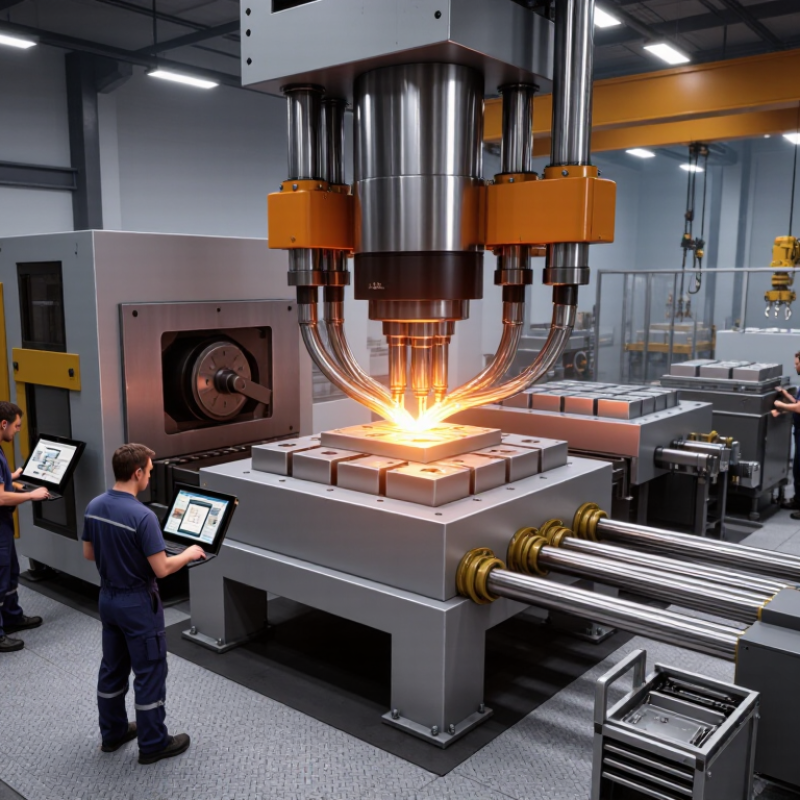
An aluminum casting machine is an integrated system that melts, transfers, and shapes aluminum alloy inside a mold. The furnace heats the alloy above its melting range, commonly about 570–660°C. A dosing unit then moves the liquid metal into a die or sand mold. Pressure, filling speed, and cooling time control the final shape.
Common machine types
Common machine types include gravity die, low-pressure, and high-pressure casting systems. High-pressure equipment can produce thin walls and detailed parts, but it demands accurate die temperature control. The ASM Handbook notes that trapped gas, oxide films, and uneven solidification can reduce casting strength. In practice, operators inspect vents, measure melt temperature, and remove moisture near the mold. Small errors matter.
Market scale and equipment selection
Market scale also explains the need for reliable equipment. The USGS Mineral Commodity Summaries 2025 estimates global primary aluminum production at roughly 72 million metric tons in 2024. The International Aluminium Institute reports that aluminum production remains energy-intensive, increasing pressure to reduce scrap and electricity use. A suitable machine should therefore support stable cycles, efficient melting, and measurable material recovery. The “best” machine depends on alloy, part size, production volume, and required tolerance. I would not choose from speed alone. A faster cycle can create more defects. That is easy to overlook.
How Aluminum Casting Machines Work
What Is the Best Aluminum Casting Machine in 2026?
How Aluminum Casting Machines Work
An aluminum casting machine turns heated metal into accurate components through controlled melting, filling, cooling, and release. The process starts when aluminum ingots enter a heated furnace. Sensors monitor temperature because overheated metal can increase oxidation and weaken the final casting. Clean, stable heat matters.
After melting, the operator removes surface impurities and transfers the liquid aluminum into a holding chamber. A casting machine then pushes or pours the metal into a prepared mold. Gravity systems rely on controlled pouring, while pressure systems force aluminum into narrow cavities. Pressure improves detail, but incorrect settings may trap air or create flash.
The mold removes heat quickly through cooling channels. As the aluminum solidifies, the machine maintains pressure when required. This helps reduce shrinkage near thick sections. Ejector pins later separate the part from the mold. Trimming removes gates and excess material, while inspection checks dimensions, pores, cracks, and surface quality.
A reliable machine needs repeatable temperature control, steady pressure, durable tooling, and accessible maintenance points. Digital monitoring can record cycle times and alarm conditions before defects spread. Still, automation does not remove judgment. A slightly dirty mold or delayed cooling line can change the result. In practice, technicians should compare casting weight, hardness, and measurements across several cycles. Some defects remain difficult to explain, especially when material quality and mold temperature change together.
Key Types of Aluminum Casting Machines
What Is the Best Aluminum Casting Machine in 2026?
The best aluminum casting machine depends on part size, alloy, accuracy, and production volume. Key types include gravity die casting, high-pressure die casting, low-pressure casting, and squeeze casting. Gravity die machines fill reusable steel molds with minimal hydraulic force. They suit engine covers, housings, and medium-volume components. Their tooling costs are manageable, but cycle times can be slower. That trade-off matters.
High-pressure die casting machines inject molten aluminum rapidly under intense pressure. They produce thin walls, smooth surfaces, and repeatable dimensions. This type fits automotive structures and large batches. However, fast filling can trap air and create porosity. Careful venting, melt control, and inspection remain essential. Low-pressure casting uses controlled gas pressure to push metal upward into the mold. It often delivers cleaner wheels and structural parts with fewer turbulence-related defects.
Squeeze casting combines filling with strong pressure during solidification. The result can be dense parts with improved mechanical strength. It requires accurate timing, robust dies, and disciplined temperature control. Continuous casting machines are useful for billets, bars, and sheet-related feedstock rather than complex shapes. No type is perfect. My early comparison focused too heavily on speed, while maintenance access proved equally important. Check clamping force, furnace stability, automation options, energy use, and local technical support before choosing. A machine that looks efficient on paper may struggle beside a furnace with uneven temperature readings.
How to Compare Machines for Different Casting Needs
Choosing the best aluminum casting machine in 2026 depends on the part, alloy, volume, and defect tolerance. The World Foundry Organization’s 2023 Census recorded more than 100 million tonnes of global castings in 2022, showing how widely production requirements differ. A machine for thin automotive housings needs different pressure, speed, and control than one producing thick industrial fittings.
Start with measurable requirements. Check shot size, clamping force, mold dimensions, injection speed, temperature stability, and cycle time. High-pressure systems suit complex, thin-wall parts and large production runs. Gravity or low-pressure systems may better fit thicker components, lower volumes, and simpler tooling. The International Aluminium Institute reports that recycled aluminum requires roughly 5% of the energy used for primary aluminum production. Therefore, melting efficiency and charge flexibility deserve serious attention.
Look beyond the purchase price. Measure energy per casting, metal yield, changeover time, maintenance access, and operator training. A machine with faster cycles can still lose money if downtime is frequent. Small details matter: sensors should be reachable, filters easy to replace, and data logs simple to interpret. I once underestimated cooling performance during a machine comparison. That was a costly mistake. Perfect calculations are not enough. Ask for trial castings using your actual alloy, mold, wall thickness, and production rhythm. Then compare defect rates, not impressive brochures.
What Is the Best Aluminum Casting Machine in 2026?
Machine selection depends on production volume, part complexity, required tolerances, tooling cost, and acceptable cycle time. The chart compares typical cycle-time ranges for major aluminum casting machine types.
How to read the chart: High-pressure die casting is generally suited to high-volume production and thin-walled parts. Low-pressure and gravity permanent-mold machines are often preferred for larger or structurally demanding components. Sand casting offers greater design flexibility but usually has a longer cycle time.
The ranges represent typical industry applications for aluminum parts. Actual cycle time varies with part size, alloy, mold design, automation, cooling requirements, and finishing operations.
Which Aluminum Casting Machine Is Best in 2026?
Which Aluminum Casting Machine Is Best in 2026?
The best aluminum casting machine depends on part size, alloy, volume, and defect tolerance. Grand View Research estimates the global aluminum casting market exceeded USD 75 billion in 2023, with steady growth expected through 2030. That pressure favors machines that reduce scrap, stabilize cycle times, and support traceable production data. For thin automotive housings, a high-pressure die casting machine offers fast filling and repeatable dimensions. For larger, lower-volume parts, a low-pressure or gravity casting system may provide better control and lower tooling costs.
Look closely at energy use, not only clamping force. The International Aluminium Institute reports that recycled aluminum requires about 5% of the energy used for primary aluminum production. A machine with efficient melting, insulation, and precise temperature control can strengthen that advantage. I would also require automatic pressure monitoring, real-time mold-temperature sensors, and documented safety controls. Small details matter. A stable 700°C melt can still produce porosity when venting is poor.
MarketsandMarkets reports continued investment in automated casting and digital process monitoring. However, “smart” features do not guarantee better castings. A factory should compare actual cycle data, rejection rates, maintenance access, and operator training requirements. One practical test is simple: run the same alloy and mold for several shifts, then inspect weight variation, surface finish, and internal porosity. The most expensive machine may still be the wrong choice. Supplier data can look perfect on paper, but production floors are less forgiving.

 +86-13516964051


 CONTACT NUMBER
 CONTACT NUMBER